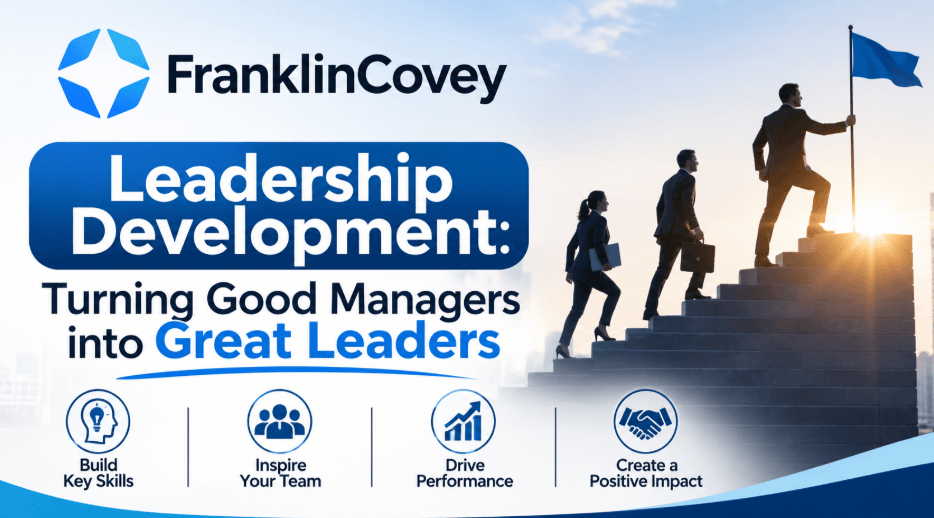
Leadership Development: Turning Good Managers into Great Leaders
A strong team is composed of individuals who have the ability to give direction. However, it takes a leader with the capacity to provide guidance, resolve conflicts, and establish trust. Unfortunately, these attributes do not develop instantaneously. They require time, practice, and the appropriate level of support. Leadership development provides the opportunity to cultivate these qualities.
Why Managers Need Strong Leadership Skills
Managers are typically concerned with day-to-day operations (tasks), meeting deadlines, and achieving team goals. However, as leaders, they need to listen to their employees, make objective decisions, and provide opportunities for employees to develop. If a manager does not possess these abilities, no matter how good he/she is at managing other aspects of his/her job, he/she may have difficulty keeping his/her employees motivated.
A well-defined plan of action for acquiring knowledge will help managers grow their self-assurance and effectively address fresh issues.
Create a Program That Builds Real Skills
The most effective training is not just about books and lectures. It offers managers an opportunity to gain experience by doing actual jobs.
When building effective leadership development programs for managers, emphasize the following skill areas:
- Clear communication and active listening.
- Smart decision-making and problem-solving.
- Team building and conflict management.
- Giving feedback and coaching staff.
Using workshops, mentorship, and group activities may assist in turning what you’ve learned into everyday routines.
See also: How to Make Career Planning Useful at Every Stage
Make Learning Part of the Work Culture
Leadership development should be ongoing. Managers should establish performance goals and measure success toward those goals periodically. They should apply the techniques learned during the initial training program in team meetings and in the course of their normal business operations. It would be beneficial for managers to exchange best practices with one another and learn from each other’s experiences. Managers can gain self-assurance and develop better ways of dealing with work-place problems through periodic coaching.
Staff feedback may additionally indicate what aspects are performing well, and which ones need further development.
Build Leaders for the Future
In order to make sure that a team works well and stays focused on its goals, good leadership is required. If a business gives its managers the appropriate resources and assistance, then that business will be able to develop stronger teams as well as prepare for the next generation of leaders. When a business implements a consistent learning program for all employees, that program has the potential to provide long-term benefits to both the employee and the business.